
PROFESSIONAL BIOGRAPHY
Formally trained in zoology and psychology, I am a university lecturer specialising in wildlife conservation.
QUALIFICATIONS:
• BSc in Zoology (2008, North Carolina State University)
• PhD in Psychology (2015, University of Stirling)
BLAKE MORTON
I am an environmental scientist specialising in wildlife conservation. My current work focuses on integrating traditional with cutting-edge multidisciplinary approaches to understand and manage human–wildlife coexistence in response to global environmental changes, such as climate and urbanisation.
Formally trained in zoology (BSc) and psychology (PhD), I publish widely in leading journals across animal behaviour, applied psychology, and conservation science. My research has been supported by major funding bodies, including the UKRI Natural Environment Research Council, the Wild Animal Initiative, and the prestigious Newton Fund. In recognition of this work, I received the University of Hull’s Research Excellence Award in 2022.
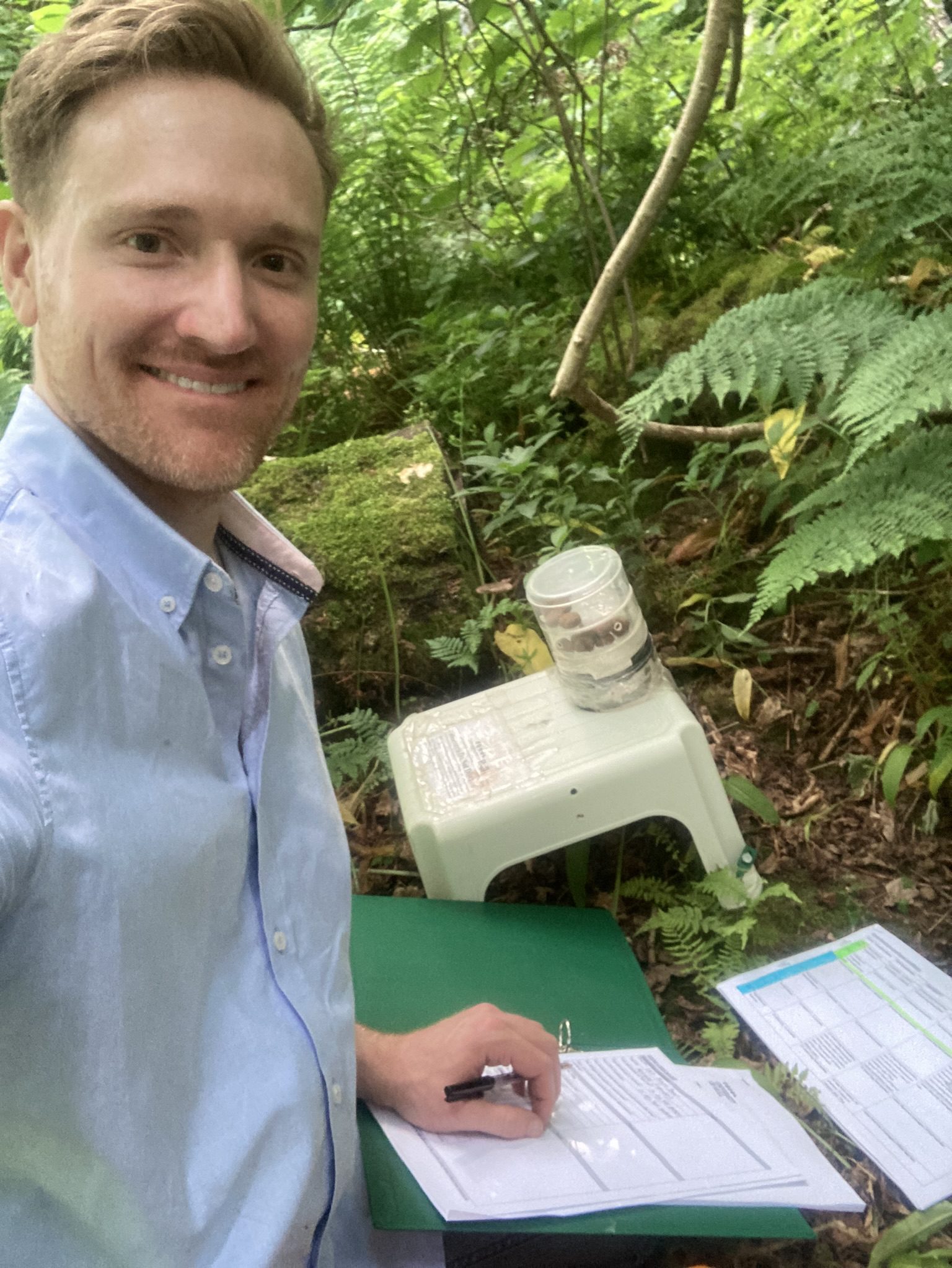
I have extensive international field experience, working across the UK, Africa, Asia, and North and South America on a wide range of species and conservation issues, from ecotourism to human-wildlife conflicts. I have collaborated with leading organisations, such as the Wildlife Trusts and the World Wildlife Fund for Nature (WWF), reflecting both the breadth and global relevance of my work.
My research has attracted substantial attention beyond academia, with global media coverage reaching over 31 million people since 2021. I have contributed interviews and expert consultations for major outlets including the BBC, The Guardian, TIME, and National Geographic.
I am the founder and director of the British Carnivore Project (SEE HERE), which combines field-based animal behaviour research with studies of public attitudes to understand the challenges and opportunities of living alongside wild carnivores. More broadly, I am the founder and director of the COEXIST citizen science programme, funded by the UKRI Higher Education Innovation Fund, which combines innovative ecological monitoring with public engagement and behaviour change interventions to support human-wildlife coexistence within communities.
My research has had a significant impact on global policy and practice. Notable examples include contributions to (1) the 2015 IUCN Best practice guidelines for health monitoring and disease control in great ape populations in Africa and Asia, (2) the widely adopted 2020 STRANGE framework for international animal behaviour research, (3) the Badger Trust’s 2023 State of the Badger monitoring programme and ‘Tackling Bovine TB Together’ policy report, and (4) the EU’s 2026 Fur Free Europe initiative.
Since 2023, I have served as an associate editor for Royal Society Publishing. I am currently convenor of the University of Hull’s Behaviour & Ecology Research Group and a member of the Scientific Advisory Group of the UK’s Badger Trust.
For more information, check out my University of Hull staff profile: